TEACHER EDITION
Compare Numbers
Math Book 1 · sheet 5
Warm-up — yesterday: Order Numbers
Put in order, least to greatest: 8, 3, 53, 5, 8
What we are learning
To compare two numbers, match them one to one. Whichever has some left over is greater.
How it is done — keep this beside you
These steps stay on your page while you work. If you get stuck, find the step you are on and read it again before you put your hand up.
1
Six counters in the top row.
● ● ● ● ● ●
2
Four in the bottom row.
● ● ● ● ● ●
● ● ● ● ● ●
● ● ● ●
3
I match them one to one.
● ● ● ● ● ●
● ● ● ● ● ●
● ● ● ●
● ● ● ● ● ●
│ │ │ │
● ● ● ●
4
Two on the top have no partner.
● ● ● ● ● ●
● ● ● ● ● ●
● ● ● ●
● ● ● ● ● ●
│ │ │ │
● ● ● ●
two left over on top
5
So 6 is greater than 4. And 4 is less than 6.
● ● ● ● ● ●
● ● ● ● ● ●
● ● ● ●
● ● ● ● ● ●
│ │ │ │
● ● ● ●
two left over on top
6 > 4 4 < 6
Practice
I DOteacher builds it, nothing erased
Which is greater, 5 or 3?
- Match five against three.
- Two are left over on the 5 side.
- 5 is greater than 3.
WE DO 1together, on whiteboards
Which is greater, 7 or 9?
Match them in your head, then boards up with the greater number.
- 9 is greater than 7.
WE DO 2together, on whiteboards
Which is less, 6 or 2?
This one asks for LESS. Read it twice before you write.
- 2 is less than 6.
YOU DOindependent, from the book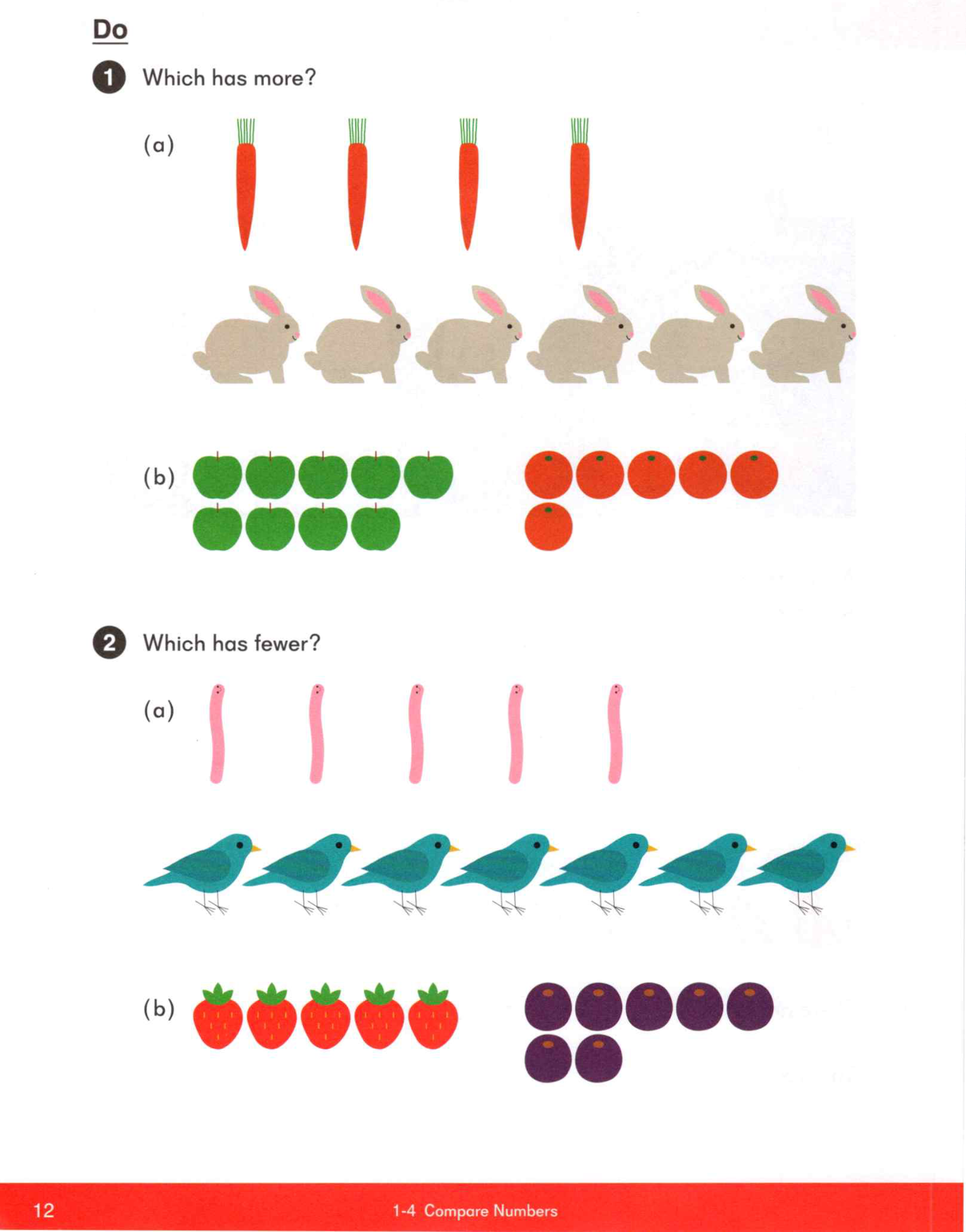
Book 1A p.13 — the Do section, clipped onto the slide
Ask yourself: “Am I being asked which is greater, or which is less?”
Watch for
The second WE DO switches to LESS on purpose. Children answer the question they expected rather than the one asked, and this is the cheapest place in the year to catch it.
The second WE DO switches to LESS on purpose. Children answer the question they expected rather than the one asked, and this is the cheapest place in the year to catch it.